Why Hire Water and Mold Experts for Non Invasive Moisture and Mold Detection

Updated: Aug 26
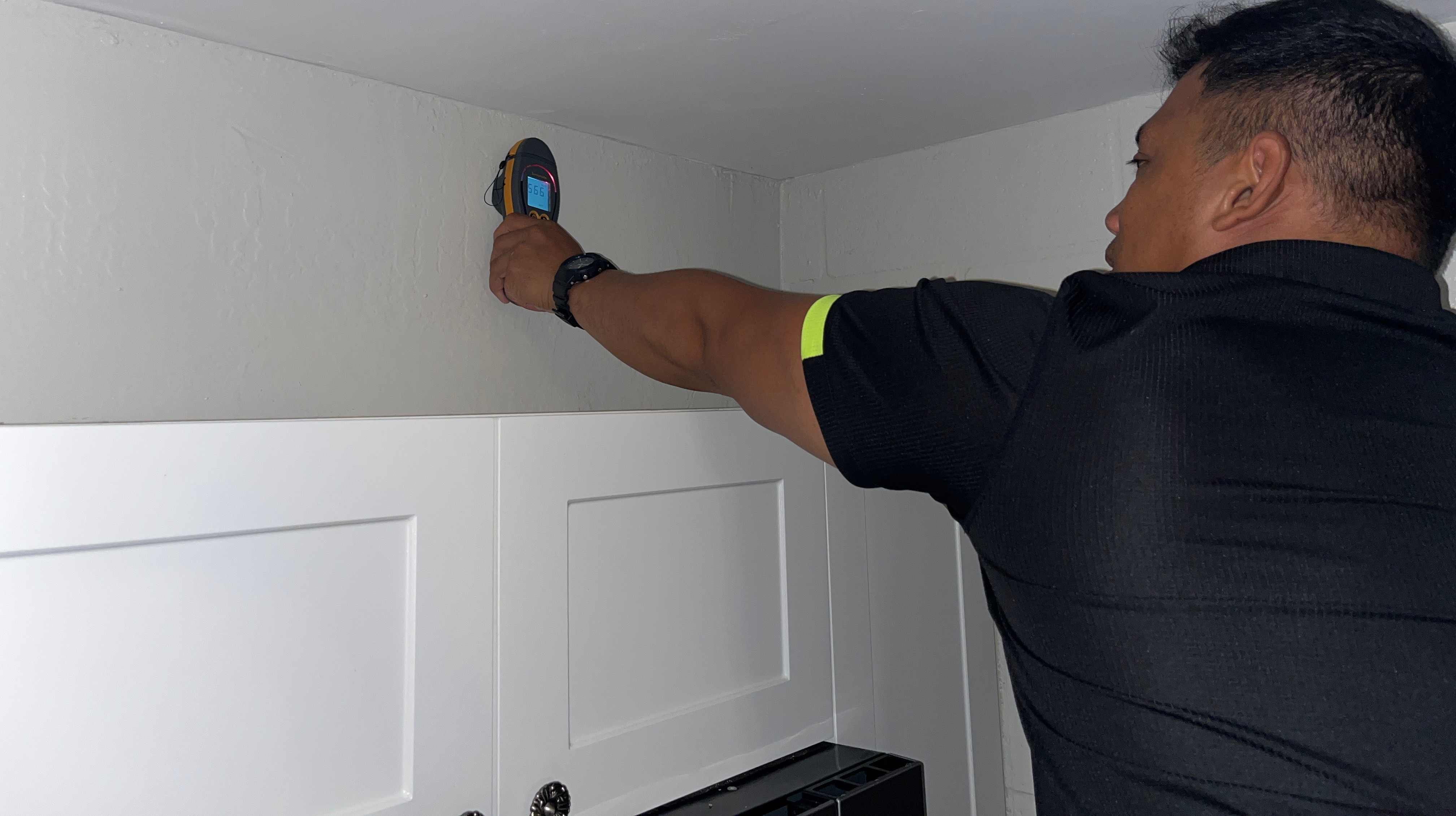
A wall can look dry while moisture sits behind it. A ceiling stain can seem small while water has already traveled several feet from the source. Mold can appear in one corner even though the real moisture problem starts somewhere else.
That is why guessing is expensive.
Hiring trained water and mold experts gives you a clearer answer before anyone starts cutting into drywall, pulling up flooring, or opening cabinets. With the newest water and mold detection technology, professionals can locate hidden moisture, map problem areas, and identify where mold conditions may exist with far less disruption to the property.
The goal is simple: find the real problem without causing unnecessary damage.
Hidden moisture rarely stays where it starts
Water moves in ways that are not always obvious. It can run along studs, soak insulation, spread under flooring, or collect behind baseboards. A small leak under a sink can migrate into a wall cavity. A roof leak can follow framing and show up far from the actual entry point.
That is one reason surface inspection alone can be misleading.
A stain, odor, or patch of visible mold may be only the symptom. The source may sit several feet away, in a concealed area that still holds moisture. If the source stays wet, cosmetic repairs will not last. New paint may bubble. New floors may cup. Mold may return.
Water and mold experts look at the building as a system. They check how water would travel based on gravity, materials, airflow, and construction details. Then they use tools to confirm what is happening behind the surface.
This matters because moisture is the condition that allows many mold problems to develop or continue. If the moisture source is not found, the problem may come back even after visible growth gets cleaned.
What non invasive moisture and mold detection actually means
Non invasive detection does not mean no investigation. It means professionals start with methods that reduce the need for destructive work.
Instead of opening a wall at the first sign of a problem, experts gather data from the surface and surrounding materials. They compare readings, look for patterns, and build a picture of what is happening inside the structure.
Common non invasive and low invasive tools include:
Thermal imaging cameras
Thermal imaging does not “see” mold or water directly. It reads surface temperature differences. Wet materials often change temperature differently than dry materials because moisture affects heat transfer and evaporation.
A trained inspector can use thermal patterns to identify areas that deserve closer testing. For example, a cool vertical pattern on a wall may suggest moisture movement. A cold patch under a window may point to a leak path.
The key is interpretation. A thermal camera is powerful, but it is not a magic answer. Air leaks, missing insulation, sunlight, and HVAC airflow can also affect temperature readings. Experts know how to confirm thermal clues with other tools.
Moisture meters
Moisture meters help confirm whether building materials contain elevated moisture. Professionals may use pinless meters to scan surfaces without puncturing them. They may also use pin meters when a more precise reading is needed in a targeted spot.
Different materials behave differently. Drywall, wood, plaster, concrete, and flooring all require the right meter settings and judgment. A single reading does not tell the whole story. A series of readings across a room can show where moisture starts, where it spreads, and where it stops.
Hygrometers and humidity testing
Moisture is not only inside walls. Air conditions matter too.
Experts often check indoor temperature, relative humidity, and sometimes surface temperature. High humidity can support condensation and mold growth, especially in bathrooms, crawl spaces, basements, laundry rooms, and areas with poor ventilation.
Air readings help answer an important question: is there an active leak, a humidity problem, or both?
Borescopes and small access points
Sometimes a technician needs to see inside a wall cavity, under a cabinet, or behind a baseboard. A borescope can inspect hidden spaces through a small opening.
This is not fully non invasive, but it is far less destructive than opening a large section of wall. When used after moisture mapping, a borescope helps target one specific area instead of turning a room into a construction zone.
The best inspections use mapping, not guesswork
The biggest advantage of hiring water and mold experts is not just the equipment. It is the process.
A professional inspection should connect clues into a map. That map may show:
Where moisture readings are normal
Where readings begin to rise
Where readings are highest
Which materials are affected
Whether moisture appears active or old
Where limited opening or further testing may be needed
This approach helps separate affected areas from unaffected areas. That can prevent over-removal, under-removal, and repeat repairs.
Guess-based work | Expert moisture mapping |
Cuts into likely areas without enough data | Uses readings and patterns before opening materials |
May miss the actual source | Follows moisture movement back toward the source |
Can remove more material than needed | Targets affected sections more precisely |
Often relies on what is visible | Checks hidden and surrounding areas |
Makes repair planning harder | Creates a clearer scope for drying, cleaning, or repair |
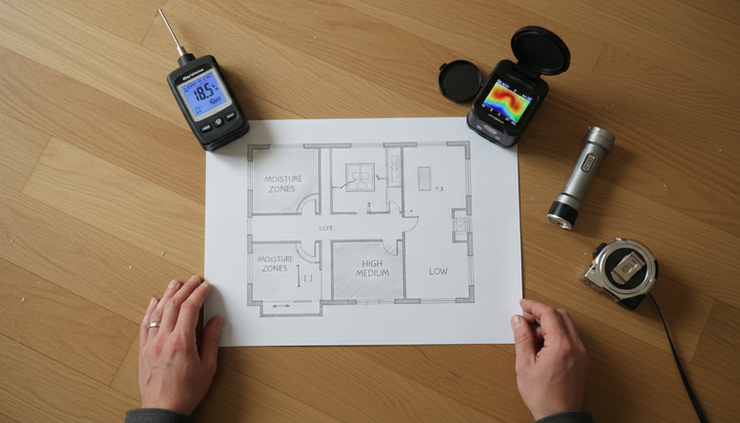
Moisture mapping also gives homeowners, property managers, and contractors a shared reference point. Instead of debating opinions, everyone can look at documented readings and affected zones.
Non invasive testing can reduce unnecessary demolition
Opening walls, pulling floors, and removing cabinets can be necessary in some cases. If materials are saturated, contaminated, deteriorated, or unsafe, removal may be the right call.
But destructive work should have a reason.
Without proper testing, it is easy to remove too much or too little. Both create problems.
Removing too much can increase repair costs, extend the project, and disrupt the property. Removing too little can leave damp materials behind, which may lead to odors, staining, or recurring mold conditions.
Non invasive detection helps answer practical questions before work begins:
Does the wall cavity show signs of elevated moisture?
Does the flooring have moisture under the surface?
Is the moisture limited to one section or spread across a larger area?
Did water travel behind cabinets or under trim?
Is the area drying, or does an active source still exist?
Should a small inspection opening be made in a specific location?
That kind of information makes the next step smarter. It also helps avoid the “just tear it out and see” approach.
Mold inspections work best when moisture leads the search
Visible mold often gets attention first. That makes sense. It can stain surfaces, create odors, and raise concern about indoor air quality.
Still, mold inspection should not focus only on what can be seen.
Mold grows when the right conditions exist, and moisture is one of the main drivers. A professional will look for the source of that moisture, not only the visible growth. That may include plumbing leaks, roof leaks, condensation, poor ventilation, grading issues, appliance leaks, or foundation moisture.
A responsible inspection may include visual review, moisture testing, humidity readings, and targeted sampling when needed. Sampling is not always necessary, and it should not replace a physical moisture investigation. If a wall is wet, that fact matters even before a lab report enters the conversation.
A careful expert will also explain the limits of the inspection. No tool can see through every material perfectly. No inspector can promise what is inside every closed cavity without some level of access. The value comes from using the least damaging methods first, then recommending limited invasive steps only when the evidence supports them.
Newer technology helps experts see patterns sooner
Modern water and mold technology gives trained professionals more ways to evaluate a property with less disruption.
Thermal cameras have become more useful and accessible. Moisture meters offer more scanning options. Digital hygrometers provide quick environmental readings. Inspection software can help document photos, readings, and room-by-room notes. Some teams use floor plans or digital sketches to mark affected areas and track drying progress.
These tools do not replace experience. They support it.
A thermal image without context can mislead. A moisture reading without material knowledge can confuse. A humidity reading without ventilation review can be incomplete.
The real strength comes when experts combine technology with building knowledge. They know where leaks commonly hide. They know how water behaves in drywall, wood framing, tile assemblies, laminate flooring, carpet padding, crawl spaces, attics, and basements. They also know when a reading calls for caution and when it calls for immediate action.
That is the difference between owning equipment and performing a professional investigation.

When calling water and mold experts makes sense
Some situations call for expert help right away. Waiting can allow water to spread or materials to stay damp longer than they should.
Call for a professional evaluation when you notice:
A musty odor that does not go away
Stains on ceilings, walls, or floors
Bubbling paint or peeling wallpaper
Warped flooring or swollen trim
Mold growth on walls, ceilings, furniture, or stored items
A recent plumbing leak, roof leak, flood, or appliance overflow
Dampness around windows, doors, basements, or crawl spaces
Condensation that keeps returning
Health concerns that seem connected to a specific indoor area
The sooner moisture gets located, the easier it is to control the scope. Fast action can prevent small wet areas from becoming larger repair projects.
This is especially true after water events. Dry surfaces may hide damp layers underneath. Carpet may feel dry on top while padding stays wet. Tile may look fine while water sits below a cabinet toe kick. A professional inspection can identify those hidden risks.
What a professional inspection should include
A good water and mold inspection should feel organized, not rushed. The expert should ask questions, inspect likely sources, use appropriate tools, and explain what the readings mean.
A typical visit may include:
A moisture history
The inspector asks when the issue started, whether there was a leak or storm event, what repairs have already happened, and whether odors or stains change over time.
A visual inspection
They check visible damage, plumbing fixtures, exterior walls, ceilings, flooring, ventilation, attic or crawl space access when available, and areas where water commonly collects.
Moisture and humidity readings
They use meters and environmental tools to compare affected and unaffected areas. Comparison is important because normal readings vary by material and location.
Thermal imaging when useful
They scan areas where temperature patterns may reveal hidden moisture paths or support further testing.
Clear documentation
Professionals should document findings with photos, readings, notes, and a basic explanation of affected areas. This helps guide drying, cleanup, repairs, or additional evaluation.
Practical recommendations
The final guidance should match the evidence. If a small area needs further inspection, the recommendation should name that area. If a leak source needs repair first, that should be clear. If materials appear dry, the report should say so.
The cheapest inspection is not always the least expensive choice
It is tempting to choose the fastest or cheapest option, especially when damage looks minor. But water and mold problems reward accuracy.
A weak inspection can lead to repeated repairs. A missed leak can keep feeding moisture into new materials. Overly broad demolition can inflate repair costs. A vague report can create confusion between property owners, tenants, insurance adjusters, remediation contractors, and repair crews.
A skilled expert helps reduce uncertainty. That has real value.
The cost of professional detection often sits far below the cost of unnecessary demolition, repeated mold cleanup, or rebuilding the same area twice. More important, it helps protect the integrity of the property.
The best outcome is not always a large project. Sometimes the best outcome is learning that the issue is limited, the source is clear, and only a targeted repair is needed.
A smarter way to protect the property
Hiring water and mold experts is about making better decisions before damage spreads or repair work begins. The newest detection tools help locate hidden moisture, trace how far it has traveled, and identify areas where mold conditions may exist. Just as important, experienced professionals know how to interpret the data.
That means fewer guesses. Less unnecessary cutting. Better documentation. More targeted repairs.
When moisture or mold is suspected, the smartest first step is not demolition. It is a careful inspection that maps the problem clearly and respects the property while finding the truth behind the surface.


Comments